

Secure Data Erasure Darwin — Protect Your Business Before Recycling IT Equipment
Last Updated:
Why Secure Data Erasure Matters for Darwin businesses

A Darwin accounting firm donated twelve old laptops to a local charity last year. Three months later, a volunteer recovered client tax returns, bank statements, and passwords from the drives — because the firm only ran a quick format before handing them over.
Every computer, laptop, hard drive, and mobile device in your business contains sensitive information — client records, financial data, passwords, emails, contracts, and proprietary business information. When you retire, sell, donate, or recycle IT equipment, simply deleting files or formatting the drive does not permanently remove your data.
Standard deletion only removes the file system’s reference to the data — the actual data remains on the disk and can be recovered using freely available tools. Even a full format can leave recoverable data behind. For Darwin businesses handling client information, financial records, or health data, this creates serious legal and reputational risk.
Under Australian privacy law (the Privacy Act 1988 and the Australian Privacy Principles), organisations that hold personal information must take reasonable steps to destroy or de-identify it when it is no longer needed. Failing to do so can result in penalties from the Office of the Australian Information Commissioner (OAIC).
We service businesses across Darwin and surrounding areas including Darwin CBD, Stuart Park, Parap, Fannie Bay, Nightcliff, Casuarina, Palmerston, Howard Springs, Humpty Doo, Berrimah, Winnellie, Woolner. Whether your office is in Darwin CBD, Stuart Park, Winnellie, Casuarina, Palmerston, our technicians come to you with all the equipment needed for on-site secure data erasure.
E-Waste Recycling in Darwin — What Happens After Erasure?
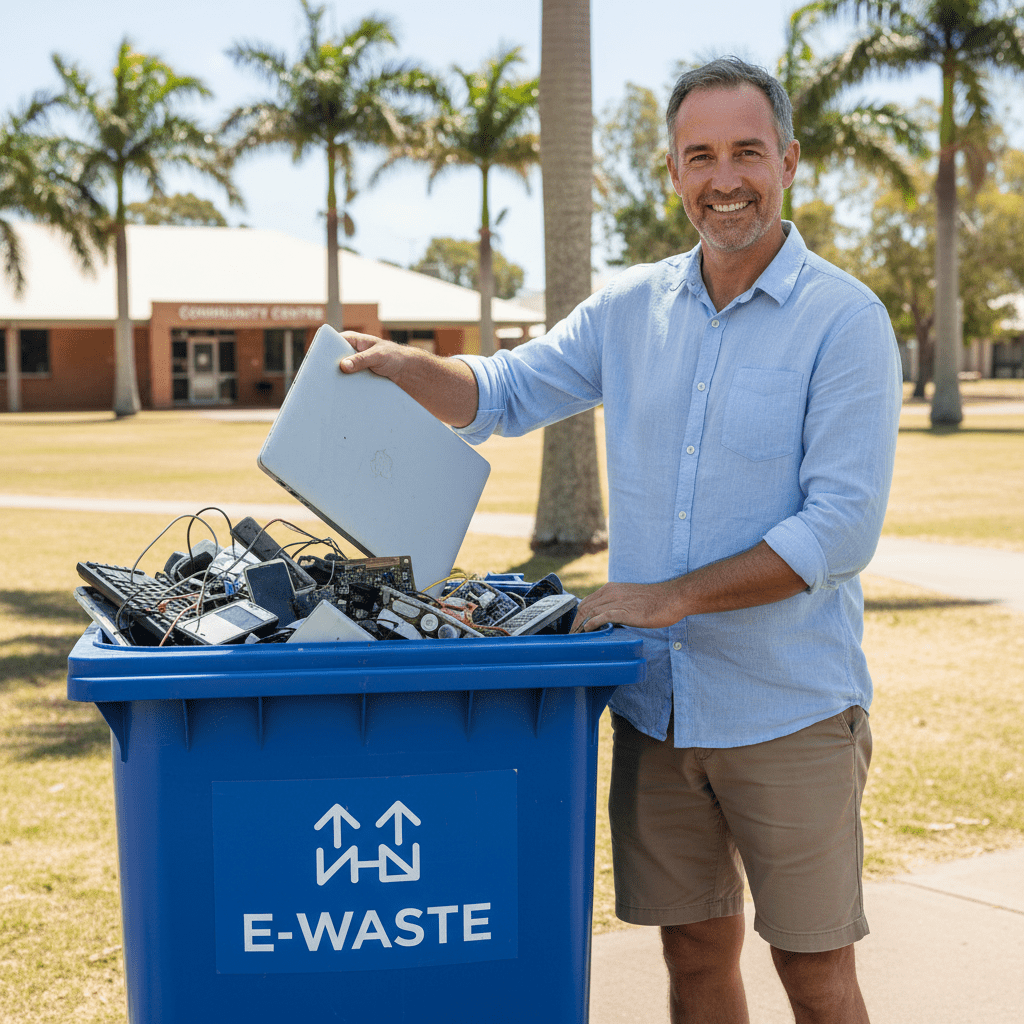
Once your data has been securely erased and certified, the next step is responsible disposal. Australia has several free e-waste recycling programs that accept business IT equipment — but remember, always erase your data BEFORE dropping off equipment at any recycling point.
Free E-Waste Recycling Programs
TechCollect
Free e-waste recycling for computers, printers, and peripherals — funded by the industry under the National Television and Computer Recycling Scheme (NTCRS)
MobileMuster
Official Australian mobile phone recycling program — drop off at Telstra, Optus, Vodafone, or Australia Post
Cartridges 4 Planet Ark
Free recycling for printer cartridges at Officeworks and participating retailers
Battery World Recycling
Drop-off locations for rechargeable batteries, laptop batteries, and UPS batteries
Local Council E-Waste Services
Northern Territory e-waste can be dropped at council waste management facilities. Darwin and Alice Springs have dedicated e-waste collection points.
⚠ Important Reminder
Never drop off IT equipment at recycling points without first having the data professionally erased. Public recycling bins are not secure — anyone can access equipment left there. Get your data erased and certified before recycling.
Your Local IT Team in Darwin
From offices overlooking Darwin Waterfront, Mindil Beach Markets, Crocosaurus Cove to businesses near Darwin Military Museum and East Point Reserve, we have been providing on-site IT services to Darwin businesses for over two decades. We know the area, we know the parking, and we know which coffee shops to grab a flat white from between jobs.
Australia’s most northern capital. Tropical climate creates unique IT challenges. Strong defence, mining, government, and tourism sectors. Cyclone season risks.
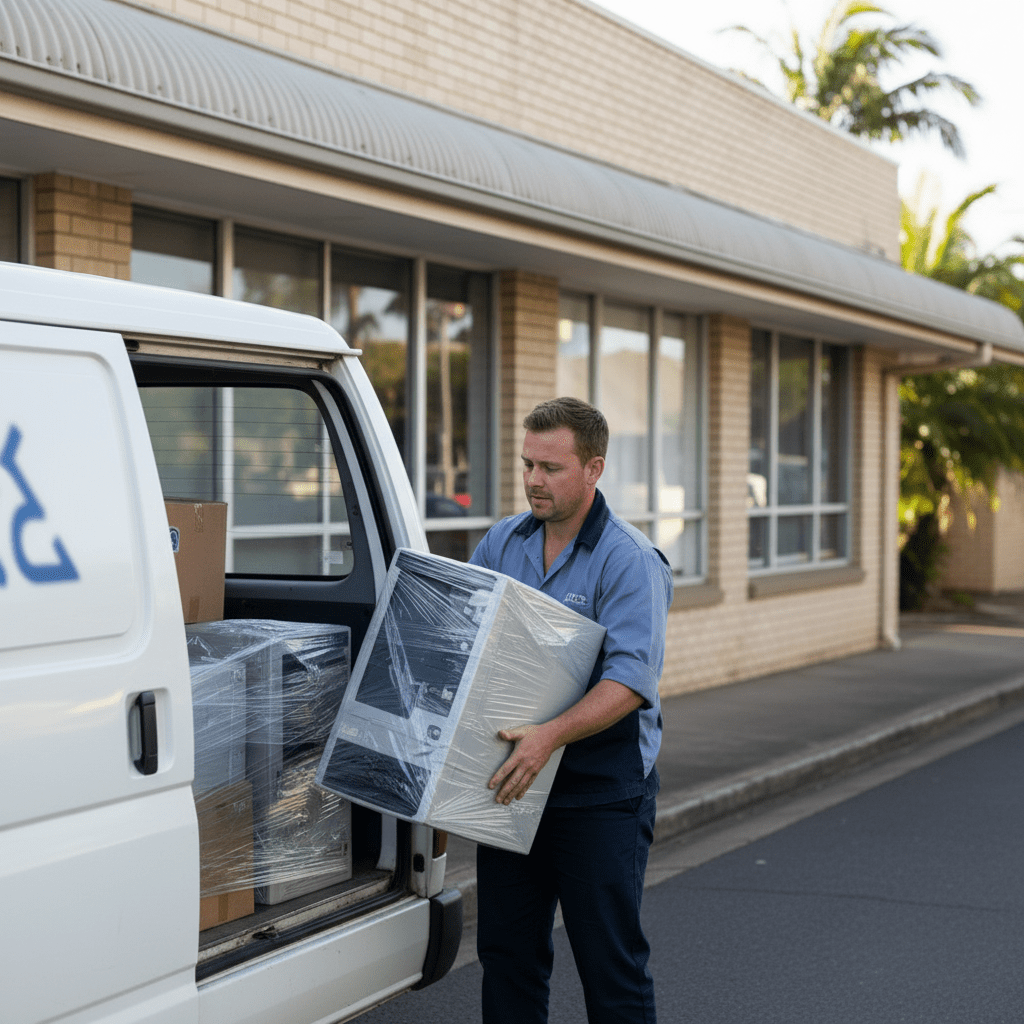
Whether you need a single laptop wiped before handing it to a new employee or an entire server room decommissioned, our technicians come to your Darwin premises with everything needed to do the job on-site. No need to transport sensitive equipment — we bring the tools to you.
Certificate of Data Destruction
A Certificate of Data Destruction provides documented proof that data has been permanently and irreversibly destroyed. This certificate is critical for Darwin businesses:
Compliance audits — demonstrate to regulators that personal information was properly disposed of under APP 11
Insurance requirements — many cyber insurance policies require documented data destruction procedures
Client confidence — show your clients you take their data seriously, even after the engagement ends

Internal governance — maintain a complete audit trail for your IT asset register
A proper certificate should include: the date of destruction, the method used (software wiping standard, physical destruction type), the serial numbers of all drives processed, verification results, and the name and credentials of the person who performed the erasure.
Darwin — Did You Know?
Here are a few things that make Darwin unique — and why local businesses here deserve IT services that understand the community.
Darwin has been destroyed and rebuilt twice — by Cyclone Tracy in 1974 and Japanese bombing raids in 1942.
Darwin is closer to Jakarta, Indonesia than it is to Sydney.
Data Erasure Methods Explained
There are three main approaches to secure data erasure, each suited to different situations. The right method depends on the sensitivity of your data, the type of storage device, and whether you plan to reuse the hardware.
1. Software-Based Secure Wiping
Software-based erasure uses specialised programs to overwrite every sector of a hard drive or SSD with random data, multiple times. This is the most common method for Darwin businesses that want to reuse or resell equipment after erasure.
How it works: The erasure software writes patterns of ones, zeros, and random data across the entire drive surface. Multiple passes ensure that even advanced forensic tools cannot recover the original data. Industry standards include the NIST 800-88 (Clear and Purge) and the older DoD 5220.22-M standard.
Best for: Hard drives (HDDs) that will be reused, donated, or resold. Also works for SSDs when using manufacturer-specific secure erase commands (ATA Secure Erase or NVMe Format).
Time required: 1-4 hours per drive depending on size and number of passes.
Certification: Professional erasure tools generate a Certificate of Data Destruction with drive serial numbers, erasure method used, and verification results — essential for compliance audits.
2. Physical Destruction
For the highest level of security, physical destruction renders storage media completely unreadable by mechanically shredding, crushing, or drilling through the drive platters or memory chips.
How it works: Hard drive platters are shredded into small fragments using industrial shredders, or the drive is punctured/crushed using a hydraulic press. For SSDs, the NAND memory chips must be physically destroyed since magnetic degaussing does not affect solid-state storage.
Best for: Highly sensitive data (medical records, legal files, financial data), end-of-life equipment that won’t be reused, and compliance requirements that mandate physical destruction.
Important note about SSDs: Traditional degaussing (magnetic erasure) does not work on SSDs — SSDs store data in flash memory chips, not on magnetic platters. SSD destruction requires either physical shredding or cryptographic erasure.
3. Cryptographic Erasure
Cryptographic erasure works by destroying the encryption keys that protect self-encrypting drives (SEDs). Without the key, the encrypted data becomes permanently unreadable — even if the raw data still exists on the drive.
How it works: Modern drives with hardware encryption (OPAL-compliant SSDs and SEDs) can be instantly erased by deleting the media encryption key (MEK). This is the fastest method — taking seconds rather than hours.
Best for: Self-encrypting drives, enterprise SSDs, and situations where speed is critical. Requires the drive to have been encrypted from initial deployment.
How The Original PC Doctor Handles Secure Data Erasure in Darwin
We provide professional data erasure services for Darwin businesses. Our process ensures your data is permanently destroyed with full documentation:
1. Asset audit — We identify all storage devices in your equipment, including hidden drives in printers and network devices
2. Data erasure — Using NIST 800-88 compliant software, we securely overwrite every drive with verification passes. For high-security requirements, we offer physical destruction
3. Verification — Every drive is verified post-erasure to confirm no recoverable data remains
4. Certification — You receive a Certificate of Data Destruction with serial numbers, method used, and verification results for your compliance records
5. Responsible recycling — We can coordinate with TechCollect or your council e-waste service for environmentally responsible disposal of the wiped equipment
We service businesses across Darwin and surrounding areas including Darwin CBD, Stuart Park, Parap, Fannie Bay, Nightcliff, Casuarina, Palmerston, Howard Springs, Humpty Doo, Berrimah, Winnellie, Woolner. Whether your office is in Darwin CBD, Stuart Park, Winnellie, Casuarina, Palmerston, our technicians come to you with all the equipment needed for on-site secure data erasure.
Australian Compliance Requirements
Several Australian laws and standards require businesses in Darwin to securely dispose of data:
Privacy Act 1988 — Australian Privacy Principles (APPs)
APP 11 requires organisations to take reasonable steps to destroy or de-identify personal information when it is no longer needed for any purpose permitted under the APPs. “Reasonable steps” for electronic data means using certified erasure methods — not just deleting files.
Notifiable Data Breaches (NDB) Scheme
If personal information is accessed by an unauthorised party due to improper disposal of IT equipment, this may constitute a notifiable data breach under the Privacy Act. The affected individuals and the OAIC must be notified, and penalties can reach $50 million for serious or repeated breaches.
Industry-Specific Requirements
Healthcare: The My Health Records Act 2012 and state health records legislation impose strict data handling requirements. Medical practices, dental clinics, pharmacies, and allied health practitioners must ensure patient records are destroyed securely.
Financial services: APRA Prudential Standard CPS 234 requires financial institutions to manage information security across the full lifecycle — including secure disposal.
Legal: Law firms have professional obligations under state and territory legal profession rules to protect client confidentiality, including when disposing of IT equipment.
Government and Defence: The Australian Government Information Security Manual (ISM) published by the Australian Signals Directorate (ASD) specifies sanitisation requirements ranging from clearing to destruction based on data classification.
Hot Tips: Protecting Your Business Data
After more than 20 years helping Darwin businesses with their IT, we have picked up a few things most people learn the hard way. Here are our top tips:
What Needs to Be Erased? A Complete Checklist
Data lives in more places than most Darwin businesses realise. Before decommissioning any IT equipment, check all of these:
Often overlooked: Multifunction printers and photocopiers contain internal hard drives that store copies of every document ever printed, scanned, or copied. These must be erased before the equipment leaves your premises — especially in medical, legal, and financial settings.
What Darwin Businesses Say
We’ve helped hundreds of businesses across Australia securely dispose of sensitive data and move forward with peace of mind. Here’s what our clients have to say:
“I was not confident before about data security, but after talking with their technician I understanding the risks and the solutions. They destroyed drives properly and gave complete documentation. Peace of mind, you know?”
Patricia Wong
Director, Legal Firm
“Top notch service, very efficient. We had a fleet of decommissioned computers from our office and they sorted everything out. Professional team, proper documentation, and they were done in one day. Highly satisfied.”
James Hendricks
IT Manager, Professional Services
“After a data breach scare at our pharmacy, we wanted to be absolutely sure our old systems were wiped properly. They did complete audit, explained everything, and gave us certificates showing destruction with all serial numbers.”
Howard Liu
Pharmacy Owner, Healthcare Retail
Common Mistakes Darwin Businesses Make
Thinking “Delete” Means Gone
When you delete a file, Windows or macOS simply marks the space as available — the actual data remains intact until overwritten. Free recovery tools like Recuva can retrieve “deleted” files in seconds.
Relying on Factory Reset for Phones
A standard factory reset on Android or iOS does not securely erase all data. On older devices especially, data can be recovered after a reset. Encrypt the device before resetting, or use manufacturer-specific secure wipe tools.
Formatting a Drive
A “quick format” only clears the file table — all data remains. Even a “full format” on modern Windows only writes zeros to the drive once, which may not meet compliance standards. Use dedicated erasure software with verification.
Forgetting About Printers
Enterprise printers and multifunction devices store copies of documents on internal hard drives. When your printer lease ends or you upgrade, ensure the internal storage is erased.
Not Getting Documentation
Without a Certificate of Data Destruction, you have no proof that data was properly disposed of. If a breach investigation occurs, “we think we deleted it” is not a defensible position.
Book Secure Data Erasure in Darwin
Whether you’re decommissioning one laptop or an entire office of equipment in Darwin, we’ll make sure your data is gone — permanently and provably.