
Seagate, Intel & Corsair SSD Data Recovery — Barracuda Fast, 530, 600, Corsair MP600 & All Models
Last Updated:
Lost data? Stop using the device and act now — early action is the biggest factor in successful recovery.
✔ Free file list before you pay · ✔ Free phone assessment · ✔ ISO-5 Class 100 clean room · ✔ 20+ years experience
Seagate entered the SSD market later than Samsung and WD but now offers competitive ranges including the Barracuda 510/530 NVMe and Barracuda Fast external SSD. Intel’s SSD division (now Solidigm, acquired by SK Hynix) produced some of the most enterprise-critical SSDs in the world — the Intel Optane, Intel 660p, 760p, and enterprise P5800X are all drives we recover from regularly. Corsair’s enthusiast SSDs (MP600, MP600 GS, MP510) use Phison controllers and are popular in gaming and workstation builds.
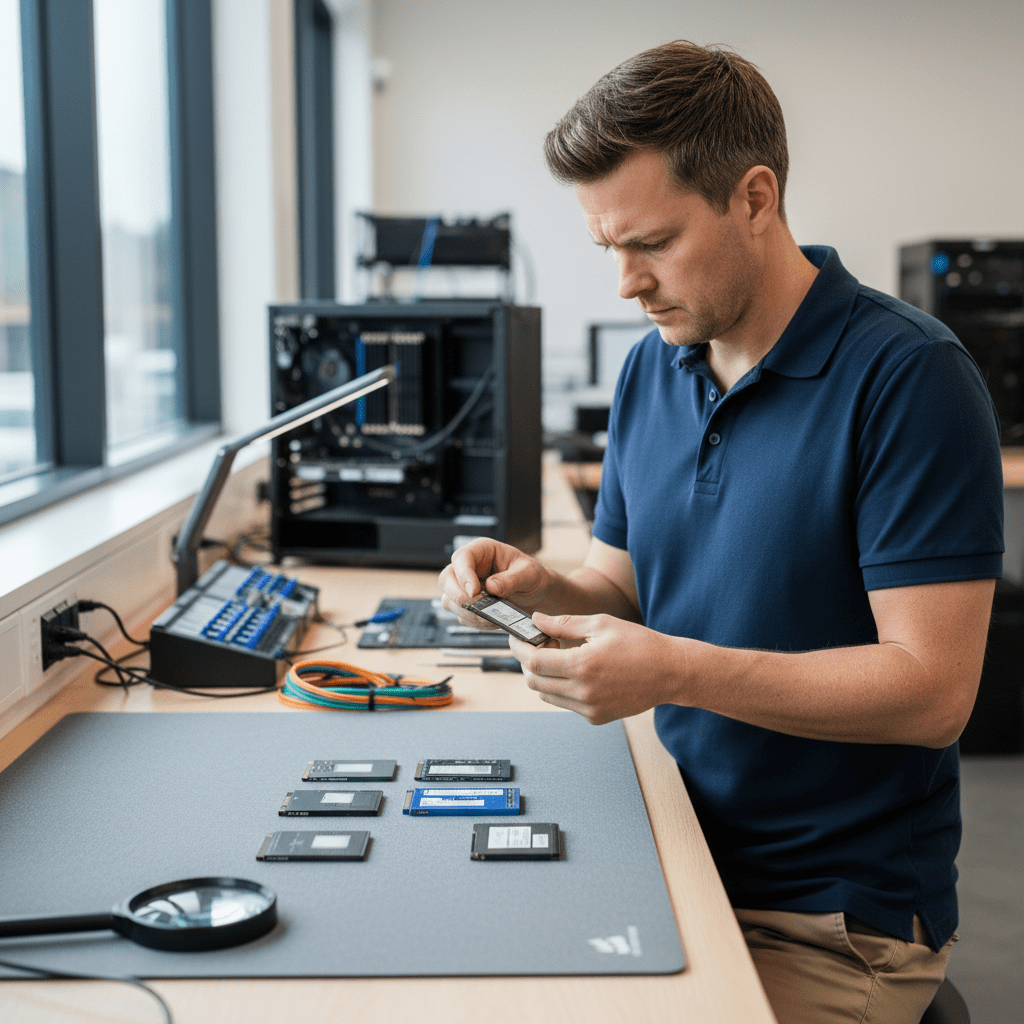
The Original PC Doctor has worked with all three brands since their SSD product lines began. Intel Optane (3D XPoint technology) presents unique recovery challenges distinct from NAND-based SSDs — it uses persistent memory technology where standard NAND recovery tools don’t apply. Our engineers understand the differences and have Optane-specific assessment procedures.
Seagate, Intel & Corsair Models We Recover From
Barracuda 510 (PCIe 3.0), 530 (PCIe 4.0) — M.2 NVMe; Phison E12/E18 controllers
FireCuda 520 (PCIe 3.0), 530 (PCIe 4.0) — gaming-grade NVMe with high endurance
Barracuda Fast SSD 500GB–2TB — USB-C portable external; 2.5″ SATA inside
660p (QLC NVMe), 760p (TLC NVMe), 670p — mainstream Intel NVMe; now marketed as Solidigm
Optane H10, M10, 800P, 900P, P5800X — 3D XPoint persistent memory; unique recovery requirements
Enterprise SATA (D3) and NVMe (P5510) — common in Dell/HPE servers; now Solidigm-branded
MP600 Pro XT (PCIe 4.0), MP600 GS, MP600 Core — Phison E18 controller; heatsink and non-heatsink versions
MP510, Force Series MP500, Force Series GT — PCIe 3.0 NVMe; Phison E12 controller
Common Seagate, Intel & Corsair SSD Failure Modes
- Seagate FireCuda 530 Phison E18 failure: The Phison E18 controller in FireCuda 530 is susceptible to power-loss-induced failure — the controller freezes on next boot, drive is not detected
- Intel 660p QLC block exhaustion: The Intel 660p uses QLC NAND with relatively limited write endurance — heavily used 660p drives can exhaust their write endurance unexpectedly, causing the controller to mark too many blocks as bad
- Corsair MP600 thermal throttling failure: The Corsair MP600 Pro XT generates significant heat — without the supplied heatsink, the Phison E18 controller can fail. The heatsink version includes an aluminium heatspreader that should not be removed
- Intel Optane cache module failure (H10): Intel Optane H10 drives combine 3D XPoint Optane cache with QLC NAND on one M.2 module — if the Optane cache module fails, the QLC NAND data partition may still be accessible
- Seagate Barracuda Fast USB bridge failure: The Barracuda Fast external SSD’s USB-C bridge controller can fail — the internal 2.5″ SATA SSD is typically intact and recoverable
- Solidigm (Intel) NVMe compatibility issues: Post-acquisition Solidigm SSDs maintain Intel firmware but some have had compatibility issues with specific motherboard BIOS versions — the drive is functionally fine but not detected in the target system
Intel Optane SSD Recovery
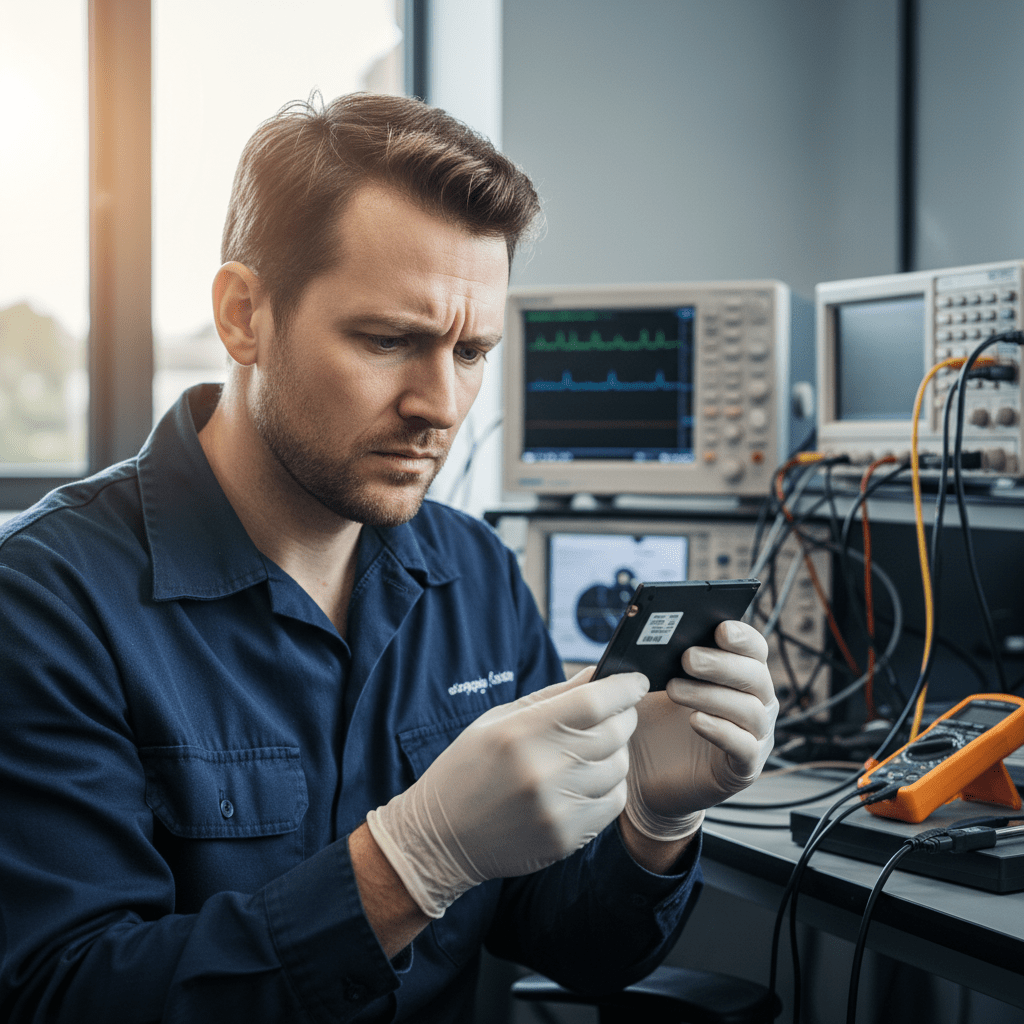
Intel Optane SSDs (800P, 900P, H10, P5800X) use 3D XPoint persistent memory technology — a non-volatile storage medium that behaves differently from NAND at the bit-cell level. Optane offers extremely low latency and high endurance (P5800X is rated for 100 drive writes per day) but fails differently from NAND:
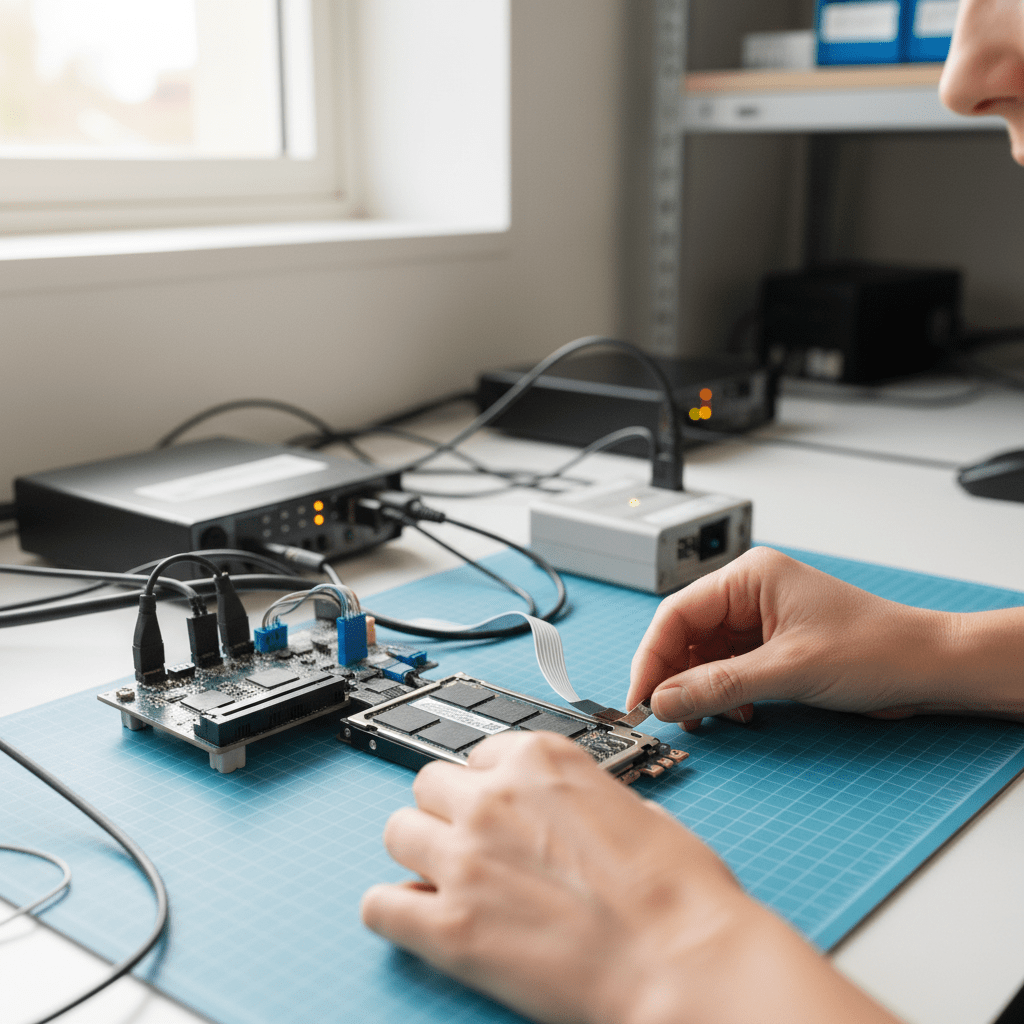
- No TRIM or wear leveling in the conventional NAND sense
- 3D XPoint failures are typically controller or interconnect related rather than NAND cell exhaustion
- Standard chip-off techniques used for NAND do not apply to 3D XPoint media
- Intel Optane H10 (hybrid Optane + QLC) is more common in recovery context — the QLC data partition can often be recovered even when the Optane cache fails
Seagate, Intel & Corsair Warnings
Free Resources
Independent, non-commercial references:
Get your data back — free file list, free phone assessment. Talk to a specialist today.
✔ Free file list before you pay · ✔ Free phone assessment · ✔ ISO-5 Class 100 clean room · ✔ 20+ years experience
Frequently Asked Questions
My Seagate FireCuda 530 is not detected after a power outage — is it recoverable?
Yes, this is a common FireCuda 530 failure pattern. Power-loss events can cause the Phison E18 controller to enter a locked state where it doesn’t respond to host initialisation. Our engineers use Phison controller recovery tools to attempt firmware repair. If the Phison E18 is permanently damaged but the NAND is intact, chip-off extraction is possible — the FireCuda 530 uses Phison’s proprietary NAND arrangement which our tools support.
My Intel Optane H10 failed — can the data on the QLC partition be recovered?
Yes, in many cases. The Intel Optane H10 combines an Optane cache tier and a QLC NAND data tier on one M.2 module. If the Optane cache tier has failed but the QLC NAND tier is intact, we can often recover the data stored in the QLC section. The Optane cache data itself (which is mirrored from the QLC tier) is typically not the primary data — your files are stored on the QLC partition. Contact us for an Optane-specific assessment.
Is there an assessment fee for Seagate, Intel, or Corsair SSD recovery?
A non-refundable assessment fee applies to all data recovery. For Intel Optane drives, the assessment is more involved due to the unique 3D XPoint technology — this is reflected in the assessment fee. For standard NAND-based Seagate and Corsair SSDs, the standard assessment applies. The fee is credited towards recovery costs if you proceed.
My Corsair MP600 Pro XT failed after heavy gaming use — what are the recovery options?
Corsair MP600 failures from sustained gaming use (sustained high temperatures) typically present as Phison E18 controller failure with intact NAND. Our assessment determines whether firmware repair is possible or chip-off extraction is required. The MP600 Pro XT uses Micron or SK Hynix TLC NAND depending on batch — both are well-supported by our recovery tools.
Can you recover from a Seagate Barracuda Fast external SSD that was dropped?
Yes, in most cases. The Seagate Barracuda Fast external SSD contains a standard 2.5″ SATA SSD internally. Physical drop damage typically affects the USB bridge PCB or the plastic housing — the internal SATA SSD is usually intact. We open the Barracuda Fast housing, remove the internal SSD, and recover data directly from it using SATA recovery tools.
Free assessment · No-obligation quote · 24/7 emergency line · Australia-wide service